Tuesday, September 22, 2015

It's Ines with an accent - Inès

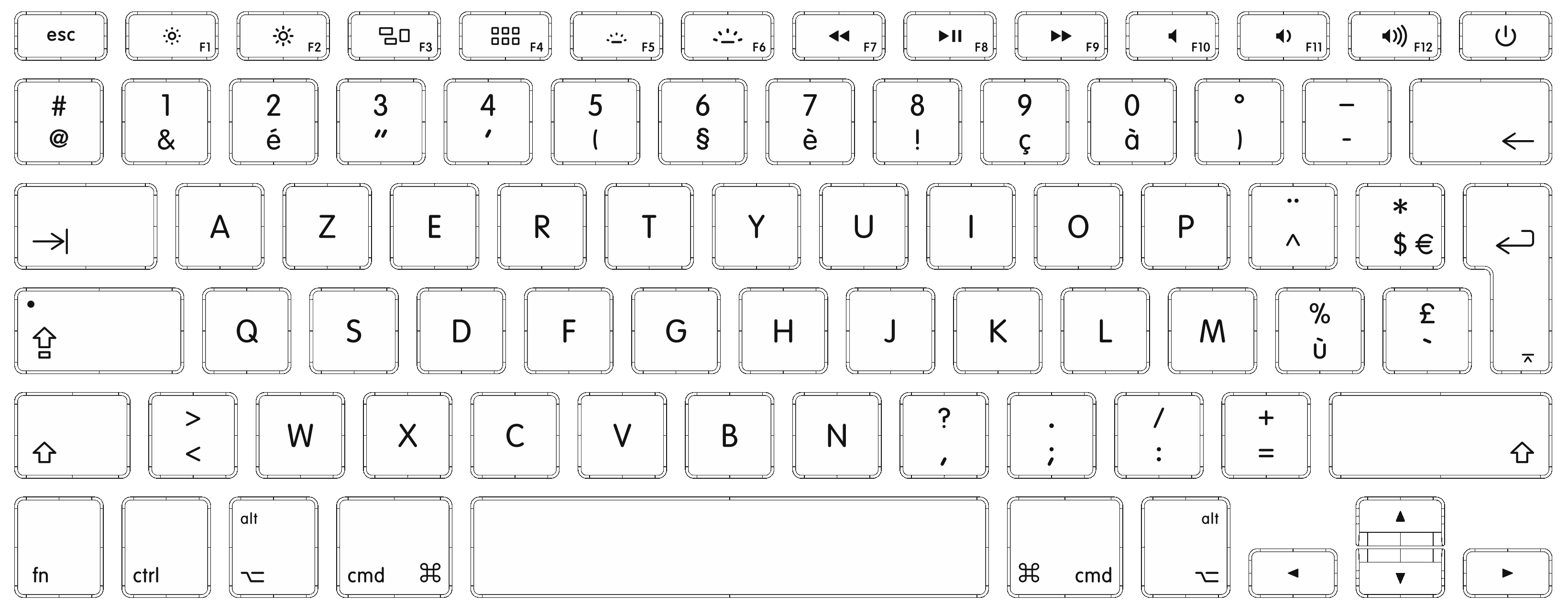
https://support.apple.com/library/content/dam/edam/applecare/images/en_US/keyboards/french_notebook.png
French keyboard - notice the #7 key

Imagine you have a keyboard and you have to spell your name but the keyboard is missing the a, the e and the i. What does your name look like now? It doesn't look like your name. 
That's what happened to me when I moved to England - my name wasn't mine anymore. Obviously I insisted on googling it each time we were on the computers and copying and pasting my real name with the è in it and I dutifully drew that little bar over the e before turning in any written work. But after a few months of seeing the little red waves under my name and loosing time looking through the foreign characters section on Word I gave up. That was the first time my name changed. Altogether I've had this name change for six non consecutive years. If you're confused please look at the title.

Second time was one summer I went to camp and we got to choose our names - I wanted to be called Ginny (as in Harry Potter Ginny) but another girl had already taken it so I ended up with Jenny and discovered the song Jenny from the Block, the only Jennifer Lopez song I actually know. We all made friends but only found out each others' real names on the last day when we were exchanging addresses. I still only remember those people through the names I met them with (made friends with the Ginny girl by the way). I only changed my name for three weeks but I remember it very well for something that happened a long time ago. Changing names wasn't hard at all and I started turning around pretty soon when people called out for 'Jenny.'

The last time I changed names was this summer - I pretended to be called Alice and invented this whole fake story to a bunch of people for some messed up twisted plan (that totally worked, thank you Blair Waldorf) and these people, who actually know someone who knows my real name, still refer to me as Alice. I loved being able to invent a whole other person and I could've kept my real name but I chose not to.

The last name change demonstrates that I do associate my 'story' to my name as I chose not to mix my own name with a story that wasn't mine. I'd like to say I care a huge amount about my name and its roots (Moroccan, French, Spanish, depends on where you look) but I honestly don't - I feel like a name is interchangeable with another as shown in the first two examples. It's on my passport, my birth certificate and that's about it. I don't believe anything that is "me" is attached to my name. There is no personal meaning to me, except that when a teacher is doing the attendance sheet for the first time and awkwardly pauses, chances are that that's my name - at least in English speaking countries. 

http://manrepeller.wpengine.netdna-cdn.com/wp-content/uploads/2015/03/ines-de-la-fressange-jeans-elle-FR-777x1000.jpg
The woman in the picture is Inès de la Fressange - she's a famous French model and my favourite person with who I share a name with.
Going back onto the accent business, that's where my "two" comes in - there's the French one, which is my true name and the one with 'that weird spelling' and then the Engliscised one - Ines. I would say that currently in this country Inès is my individual name whereas Ines is the name that makes me part of a larger whole, where people can easily type and write the name I have been given. 

inns

Friday, September 11, 2015

Lake Street USA & Handmaid's Tale

Wing Young Huie: Most Popular &emdash;
This photograph comes from a series entitled "Lake Street USA", by Wing Young Huie. The photographer was born in Minnesota to two Chinese immigrants, and he exhibited the 675 black and white photographs in a piece of public art display in 2001. The photos themselves were taken and showcased in Minneapolis, on a six mile stretch of Lake street. The pictures were taken over the course of four years.

The first thing we can observe from the picture is the woman in the middle of the road, seemingly in danger as cars are relatively close to her and there is no pedestrian crossing under her feet. She is pushing a sort of cart where you can see two garbage bags full of cans or bottles. By just looking at this picture you could think the meaning of this picture is to show that she is risking her life to carry those bottles - it is common knowledge that many people collect them to make some money off of them, and it is easy to interpret it as this simple 'risking her life for bottles' meaning.

If you look at the deeper meaning of the picture and read the text that is included underneath it you will see that that was not the photographer's intention. He talks about seeing her working diligently even through hard days in winter, mentions her daughter who talks about her never getting sick and her reason for her collecting those bottles - money but also the purpose it gives her every week.

Mr. Huie also talks about her native country, Cambodia, where she used to carry her groceries in the same way. He gives her a reason to be, in a place where she seems out of place, standing in the middle of the road when all these cars are driving past whereas she is just there. The 'other' or the unknown is also implied in the text as the children who throw rocks at her bruise her legs, most likely out of fear of the unknown, and you can see it in the picture, as the woman is in the motion of walking, across the road and out of the picture, where you cannot see - the unknown. Her reaction to the picture is also something that is alien, as she mentions being too thin and how she "used to be much prettier" - thin is the perceived beauty standard in Western culture and her opinion is different to it.

On the other hand, Margaret Atwood shows the others as having been plucked from their old society and dropped in a whole other context, without having integrated the new culture. Women in general in the Handmaid's Tale - Moira, and to some extent June (?), have not assimilated or accepted Gilead's culture in the way the woman in the picture has integrated her own culture from Cambodia (way of carrying her groceries) and accepted American culture. They rebel in whatever ways they can, but ultimately fall into their place in the new society. They unwillingly become members of the society and contribute to it, in the same way the woman in the photograph ends up doing, minus the unwillingness.