Sunday, February 7, 2016

Florence + The Machine are better than Judy Bridgewater


This image on the cover is of a girl who looks like a young adult, sitting in a field of small white flowers. Seemingly distracted by something outside the picture the girl does not seem to be in any hurry or waiting impatiently for anything. The field around is all green, except for the white flowers, and behind the girl is more vegetation, as if the girl was sitting in the corner of the field of flowers. The intended purpose of the image is to show the novel is one of pensive reflection, with a single narrative of a girl. It may suggest that this story comes at a time the narrator is backed into a corner [like the girl is backed into the corner of the field]. The presence of nature all around the person pictured may indicate aspects of naturalism writing, a branch of realism influenced by Darwin. The purpose is to indicate that the subject is related to human biology in someway and is a sordid matter [for the time, because of the genetics and cloning revolutionary discoveries in the 90's and 2000's]. 

This cover is very abstract, with the background shades of orange and yellow, and only a vague human like figure visible to the right. This figure takes up the whole side of the cover and isn't meant to be insignificant, simply hard to discern. An arm sticking out of what looks like a blue dress is barely discernable, and the head seems to be turned the other way, showing only the back of the head and short black hair. This image suggest fleeting memories and an uncertainty to the story. The intended purpose is to show the novel is unclear, and may have elements that are not evident to make sense of for the reader. The fact this is not a photograph but art indicates this novel is one of fiction and perception, yet still has a message. The face turned can also lead to questions on the humanity of the figure, which was a significant question [humanity (of clones)] in the time of publication.  


This image is a photograph of a boat that appears abandoned near the shore. It seems to be newly left, maybe only for a few tides, yet the color deep purple and the blending of purple and yellow create an illusion of fog and mystery. The lack of activity near and around the boat plus the calmness of the sea next to it gives the impression this book talks about death, or at least a topic that touches on the idea of death and possible depression as the boat itself looks lonely. The boat seems to be attached to the wood through a string, and this is another indication that the novel talks about attachement, and the links that bring you back to home. The intended purpose is to convey a dark theme to the book and the boat itself may be an important symbol or part of the story. After reading the book it is important to notice that the day trip surrounding the boat is important enough to be featured on the cover, and therefore pay more attention to this turning point in the novel. 


This image is actually a drawing superposed on a faded photograph. The photograph is different shades of grey, with tall trees dominating the bottom half and reaching into the top half of the book cover. The rest is gray skies and the drawing on the photograph seems to be a jumble of black thin lines with no distinctive pattern. There is however symmetry in the top of the picture, with something that looks like lungs drawn very crudely. The lungs show a story related to anatomy or biology, and from this you can notice that the whole drawing is in fact the upper half of an anatomical body. It is a crude and inaccurate drawing yet it fulfills the purpose of showing an inner struggle inside a "scientific" body when taking into account the background image with the dark trees and gray sky. The intended purpose would be to show a sad and cold reality, possibly clinical like. The purpose would be to show the insides of a mechanism that the reader would assume to know well, yet be proven wrong due to the dual pictures used and merged together.


The similarities between these novel covers are that all of them have soft feels to them, either through the paint strokes, the blurriness or the colors. They all seem to relate to human thoughts through pensiveness and memories, either through actual figures or layout.
The differences between them are that some of them are more upfront about the anatomical part of the book topic, whereas others emphasize the human relations in the novel. The reason for this is that maybe some of those covers are more recent and therefore the interest in the actual debate of clones and humanity is not so prevalent in the times, but we as humans are always still interested in the relations and hardships 'humanized clones' can go through and relate it to our own experiences. The other covers may have been created closer to the publication time with the intent of drawing the potential reader in with its topic that was highly debated at the time and create an interesting arguent through the humanization and portrayal of the clones.

The two covers I chose to look at more closely are the second "yellow and abstract one" and fourth "anatomical and trees one" ones I analyzed briefly. The first words that come to my mind when I see the first one is femininity, with the light blue dress and softness of the whole painting and summer, because the colors blue and yellow evoke warmness to me.

For the second cover, the words that come to my mind first are horror, Gothic, depressing. The colors are dark and all grey, and the forest and trees behind provide a blended background to the drawing of the body and makes me think of horror stories where the bodies are hidden in the forest and found years later.

If I hadn't read the novel the first cover would make me think this book was about a woman, and her struggle to find herself in a setting near the beach or the sea. Now that I've read the novel, this image's relation to the text is still not apparent but I can infer that it indicates the story is unclear, with the narrator jumping from memory to memory and coming back and forth between explanations, as well as the reader's 'cluelessness' in the beginning up until the end about the world the characters live in. There are elements that are not evident to make sense of for the reader, such as the use of vocabulary such as carer and donor at the beginning. The fact this is not a photograph but art indicates this novel is one of fiction and perception, yet still has a message. The novel was set in a time that had already passed, making it fiction yet it branched a topic that was mainly opinion based and therefore showed the author's perception of current topic. The face turned also leads to questions on the humanity of the figure, which was a significant question [humanity (of clones)] in the time of publication and makes it more relevant now (cover & text).

If I hadn't read the novel the second cover would lead me to believe the novel was about scientific experiments on human bodies, and the ethical dilemmas that came with it, or something of the sort. Now that I've read the novel, this image's relation to the text is apparent in the fact that the clones are used for their bodies and most specifically their organs which is what is drawn on the cover. The woods behind used for the background remind me of the Hailsham woods, which served as a way to trap the kids inside the estate grounds as they were too scared and superstitious or naive to go beyond them.
           
In the first cover I'm analyzing I would argue that the person depicted is Miss Geraldine, as she is a motherly figure in the novel, and she is the one that brings Ruth and Kathy H. together through the game. The secret kidnapping plan surrounding her is also an interesting part of the story, as the clones are the ones protecting her when she is in fact one of the Guardians protecting them. We would be looking at this cover from the point of view of Kathy H. as she was seen as a maternal figure, one of the nicest Guardians at Hailsham. 

In the second cover I'm analyzing I would say that the portrayal of the body is meant to represent the clones the way the general society sees them. This is shown by the fact the head is not even included and dehumanizes the clones, only showing the 'valuable' parts of them. It is the way the general society sees them as they are used for the general population and there has to be a lobby, that has very weak influence, to try and prove the clones have souls and should be treated like humans - which lets us infer that the general society does not agree with that thought.   

Tuesday, January 5, 2016

Look at that end of semester freebie


I didn't really like the movie anyway. 

Sunday, December 13, 2015

To chill or to kill, that is the question / Lady M's Netflix list


Game of Thrones 

I don't think I really need to explain what Game of Thrones is at this point. If you don't know, please catch up with the rest of the world and watch your favorite characters die with the rest of us. Or watch this nine minute video where people talk really fast explaining the basics of GOT.
This would definitely be on Lady Macbeth's list because many of the stories center on characters at court, who are vying for more power. Ambitious & ruthless, Cersei and Lady M have a lot in common. Sure, Cersei's incest preference and her ability to not feel guilt at all difference her but they are both willing to do anything to gain power. The Scottish queen would greatly enjoy the show not only because of Cersei's character & the court, but also the cunning of nearly all characters and let's not forget all the murders. This would greatly help her in justifying her actions, as she could justify her & her husband's murders so much better if she compared, let's say... The Red Wedding to the murder of King Duncan. Doesn't seem like such a big thing after all now does it? Sure, they both break the rules of hospitality but no unborn baby was murdered though on second thought I'm sure she was much less disgusted than the rest of us. This show would reveal Lady Macbeth's need for reassurance and 'role models' such as Cersei Lannister. It also shows how far ambition can take you, and this may well have inspired Lady M. We can now understand that beneath all that hatred for babies that she has, she is simply insecure in her decisions and looks to validation and justification in a pixelated screen. A sometimes very bloody screen.

Reign

Reign is set in French court, during the *reign* (haha get it? It's the name of the series, how original) of Henry II who is meant to be succeeded by Frances II of France, his son. Mary Queen of Scots, which you guessed right, queen of Scotland, is set to be married to Frances. The series start as she arrives to court, and then shit starts going down. Catherine de'Medici is Frances' mum and wife of the King and she does not take kindly to Mary being at court and wedding her son, because of reasons related to the supernatural ~ Catherine's friend sees the future and has prophesied that Mary would cause the death of Catherine's first born. Now, Catherine is a pretty badass Queen, who comes from one of the most powerful and rich families in Italy but her hobby is poison, as well as killing people who get in her way. And that's only one small part of the Reign story.
Lady Macbeth would be loving this, as it involves backstabbing, running a country -who sometimes doesn't like you much-, intrigue and murder. The fact that they believe in supernatural as well (and they're both set in the same time, this could be like a reality TV show for them!) would most likely draw the Macbeth Queen of Scotland in. (#Team Mary Queen of Scots 4eva) It would reveal her interest in hiding behind masks, which is what many people do at court and "look like the innocent flower but act like a snake". It shows the importance, politically and emotionally, that rests behind this falseness. It also portrays the importance someone can put on a prophecy, where both Catherine de'Medici and Lady Macbeth do everything in their power to make it happen, or counter it.

Disclaimer: the series doesn't really follow historical stuff very well, but close enough. 

House of Cards 

House of Cards Serves Cyanide

House of Cards is basically a modern Macbeth story, dragged out along a few seasons. This couple has no problem murdering, using and tricking people to haul themselves a little higher in the political hierarchy. And they eventually succeed. Lady Macbeth would adore this one because the wife (pictured in the first gif - see any resemblances yet?) is instrumental in bringing her husband to the top, and willing to do nearly anything necessary. This series also presents a different sort of masculinity that is not often talked about (that I know of) - instead of physical masculinity, the amount of power is what is valued here. In Shakespeare's play, we are only told of Macbeth's exploits and power (Thane of Cawdor, Thane of Glamis) and in House of Cards the power is also what is valued above physical traits. Lady M would enjoy this as she could relate this dynamic back to her real life with her husband. Her choice here would showcase her awe of power, and the value she puts in helping her husband achieve standing as well as the lengths she is willing to go to. 

The Omen


Look at that cute kid. Isn't he cute? He's the Antichrist. If you want supernatural, you got it. Lady Macbeth totally seems like the kind of person who would be into horror movies. This movie starts when the wife of a American Ambassador gives birth to a dead son, so of course before she realizes her husband adopts another baby that's just been born and doesn't tell her. Bam, problem solved ~ but not quite! They move to England, packs of black dogs hang around their house, their child refuses to go to church and his nanny hangs herself publicly. Oh yeah and the kid pushes his 'mum' down the stairs and causes her to miscarry again. Lady M would enjoy this movie as it is dark, and is still focused on an elite. From it, you could infer that she enjoys twisted stories and big secrets. 

Friday, November 20, 2015

Can you imagine comparing Antigone and Macbeth that would be so cool

People are born evil. We are not born with the instinct to protect others, but ourselves. This can change with time of course, when you fall in love with someone you will put them above yourself sometimes, or when you have a child you would sacrifice yourself for them in certain circumstances. Of course, some people *cough* Lady Macbeth *cough* would "while it [the babe] was smiling in my face, Have plucked my nipple from his boneless gums and dashed the brains out."
I believe that many 'hide' the extent of their self preservation instincts because it is simply not accepted in society, something which Lady Macbeth does not do with her husband. This goes for motivation as well - many people will say that they want a particular job or school and justify it by saying that it pays well or is a good school and that may be part of the reason but in their unconscious, their Id (reference to the Freud psyche idea), they look for the prestige or advantages that are associated with their goal. Of course, there are other things that your unconscious wishes for, most likely instant pleasure and reward, easy things that are not accepted or seen as a normal societal goal/wish to wish for out loud.


The only thing that really stops people from getting what their Id wishes for is fear (or Ego and Superego according to Freud.) We all want something better than what we have, it is human and it is the reason we have progressed as a species. But fear of failing, fear of rejection, fear of consequences stops us from going for what we want and the only way we will act on those wishes and take the first step into evil is if the reward is greater than the risk.

How many of you would still be living the way you are now?

In Macbeth's case, the witches have a very strong influence on him, where they qualm his worries and fears about going after what he unconsciously wants - the crown of Scotland. This manifests itself when he starts having moral dilemmas with himself, asking himself questions. "If good, why do I yield to that suggestion Whose horrid image doth unfix my hair And make my seated heart knock at my ribs, Against the use of nature?" Well Macbeth, you're yielding to that suggestion because unconsciously, that's what you want! And the witches have been proven right once and you secretly want to believe they are right. ~ Macbeth's personal psychologist right there ~

“Never open the door to a lesser evil, for other and greater ones invariably slink in after it.”
― Baltasar Gracián, The Art of Worldly Wisdom

The consequences of an individual choosing evil, and not suffering societal consequences for it often leads them to continue down that path. Macbeth exemplifies this when, even after killing his King and becoming one, he wants more - "We have scorched the snake, not killed it." Once you get away with something, you will keep doing it and you will keep doing it and more and more until stopped by an external force. Like an army or something - better watch out for that forest of trees and the man born of no woman eh Macbeth? In other cases, the weight of the deed will stay on a person and the guilt will accumulate, causing the person great anguish and moral dilemma which cannot be solved because the action has already taken place.
If you go down the road of evil, your two choices are simple - lose all inhibitions, let your Id guide you like Macbeth who now wants everything as soon as he wishes it, continue down the path or spend your time regretting your action, feeling the guilt and trying to deal with it as best as you can. 

Saturday, November 7, 2015

I wish I was in Art History

Click here for full size image of art work.


This tapestry is believed to have been created by Flemish w(e?)avers who were residing in England, most probably London. Certain speculations give this tapestry's origin to the Cotswolds workshops of William Shedlon, one of the finest tapestry makers of the 16th century. It is named Hunters in a Landscape, and was made out of wool and silk between 1575 and 1595. Its proportions are of 1.8 x 4.6 m which is pretty big for all of you who don't know the metric system.


Fun fact: The person who bought it back then would be the equivalent of a very rich Wall Street person buying a Picasso today.

The piece of art represents a landscape with a central manor house, with several different scenes going on, such as fishing, cutting down wood, boating, and hunting. It is assumed that the man leading the hunt in the scene is the Lord of the manor depicted. It is in typical Flemish work, called "English fashion", when artists from Belgium (Flemish is the language spoken in an area of Belgium, some sort of Dutch) were fleeing from religious tumult and Protestant persecution to England and had to 'scavenge' and assemble the pieces they already had around a popular design source - the manor house, inspired by King Solomon's palace by Jost Amman.


If anybody has a 1564 Bible lying around, the drawing's in there

Quick history lesson: Elizabeth the First was the last ruler of the Tudor dynasty, the daughter of Henry the Eight (the guy who had six marriages and broke away from the Roman Catholic Church.) Elizabeth's mum was Anne Boleyn, who died beheaded. She is also known as the Virgin Queen (which explains the whole last of the Tudors thing.) As far as queens go she was pretty cool, tolerant of different Christian religions, not into wars, and she was pretty indecisive according to many historians but immensely lucky - one of the greatest naval wins happened under her reign (Spanish Armada.) This time period is called the Elizabethan era.

The craftsmen' use of shadows and colour help to depict an idealistic scene of English life under the reign of Elizabeth the First. The colours give the scenes a more joyful atmosphere, and the shadows give the impression of realistic scenes happening in England. This tapestry was not properly identified for four centuries, despite having many distinctive features belonging to William Sheldon's workshops. This includes the border of the picture itself, where the coats of arms and gargoyles are a tell tale feature. This piece of art is also well known for its use of colour and light as well as the way the forms in the art are used.

The title of the tapestry indicates that the main focus in the landscape is the lord hunting, as the scene occupies about half of the whole scenery. This signifies that the work was made for a nobleman, who considered himself the most important 'activity' in his manor and lands. The tapestry was meant to be hanged on a wall, and the small size indicates that it was meant simply for personal use.

The meaning of the work is to depict every day English life for the wealthy. It is of course an idealized portrayal as many wealthy British lords were worried in the days of Elizabeth, due to religious reasons, thrifts with Scotland (Elizabeth eventually had Mary Queen of Scots beheaded), and the many plots to have their own Queen thrown off, for another with a different religion. The use of colours and silk and the overall wealth behind the tapestry indicate it was meant to celebrate England, and depict a positive view of the ruling class. The values conveyed by the work are those of the importance of noblemen, without who the manor would not be there and the other scenes around him would not exist, as well as the prosperity of England, which any wealthy English noble would rely on.


Saturday, October 10, 2015

Advertising done right?


This advertisement is from Hyundai, more specifically from these particular people & companies;

Advertising Agency: Innocean, USA
Executive Creative Director: Greg Braun
Creative Directors: Robert Prins, Max Godsil
Art Director: Vince Feliciano
Copywriters: Josh Cassidy, James Embry
Director of Integrated Production: Jamil Bardowell
Executive Producer: Harry Lowell
Production Company: Moxie Pictures
Director: Frank Todaro
Editorial Company: Arcade Edit
Editor: Geoff Hounsell
Music: Bruno Mars
Sound Design: Henryboy
Record Mix Place: Eleven Sound
Mixer: Scott Burns

and was created specifically for the 2015 Hyundai Genesis. It was first aired during the Super Bowl commercials in 2014, and the video is called "Dad's Sixth Sense." 
The small picture in the advertisement is of course everyday parenting, where you can see again and again a son's father save him from multiple accidents waiting to happen, from falling in the lake to falling head first on a sharp corner (I totally gasped. How did they FILM that?! The real kid's mum must've been a nervous wreck. I don't care if it was probably cushions painted as rocks.) You see the child grow up, from a toddler to a child and finally a teenager. 

When he appears on screen driving with his father, he gets distracted by a pretty girl walking on the pavement and doesn't keep his eyes on the road (be safe while driving guys!). This causes him to miss the car that has just come out of the driveway onto the street and you then notice that the car has automatic emergency braking and saves the day, instead of the father having to do it this time. You can also notice the color used for the girl's cardigan and hair, which is orange. In traffic signals, orange generally means caution, which is something the boy driving should've been using. 

The boy's distraction is his deadly sin, which is lust. This is the deadly sin that is being used as a rhetorical device, as it uses pathos to convey to the audience that it doesn't matter what your sin is, this car can save you from it. And death. And killing other people in the process. It's a great car. The sin in this advertisement is almost dismissed, belittled, due to the car. It wouldn't even be considered as a sin by the audience, who would just find it amusing and the consequences of said sin are dismissed. Still, the sin is an integral part of the advertisement as without it, the car could never have been introduced as the protagonist of the story and save the teenager from himself. 
The bigger picture is that with the car there is at least one less thing to worry about for the father, who you notice in the commercial doesn't even look at the road or try to warn his son of the car on the road. (We've all had our mums totally freaked out in the passenger seat while driving right? I just realized I need this car. It will solve everything.) Parenting is made just a little easier with the help of the new 2015 Hyundai Genesis! I should be getting paid for this. 

The intended audience would be parents who currently own teenagers, and are looking to buy a car for them. They would be parents who do not want to chauffeur their children around, and who are worried about their child's safety while driving because they don't trust their child to not get distracted. The advertisement was aimed at parents because of the images shown, through the eyes of the worried adult that is always there for their child, ready to save them. The images are shown in such a way that you see the child in the advertisement grow up, the same way that you see your own child grow up. The background sounds and music is also oriented towards parents as you can hear the often uttered 'i gotcha' 'wowowah' 'nonono' that parents use when parenting young kids. The music lyrics consist of "You can count on me like one, two, three..." which is something that most parents hope their child will do in their life, to a certain extent. 

The audience would also most likely not live in a big city such as New York or Boston, as they have proper public transportation in big cities and don't require cars to get around (Can you tell I miss the metro?). Their social and economic background would be one that is wealthy enough to afford to buy a new car for a child, and one where buying a car for a 16 years old is considered socially acceptable. The cultural knowledge they have is definitely in part American, as it is seen as appropriate for a teenager to drive a car in the United States, whereas it might not be in different countries. 
This advertisement uses the stereotype of the distracted teenage boy, who cannot seem to keep his eyes on the road long enough to avoid an accident. Because girls are sooo distracting that boys can't even drive right?
http://cache4.asset-cache.net/gc/sb10069595b-004-girl-kissing-boy-sitting-in-toy-car-in-gettyimages.jpg?v=1&c=IWSAsset&k=2&d=UkxwDffTHbEHdjTUPQEr4tx8sElxRsj%2B0tSuIe2evrPZnsGx37a86frvYVaIPPS8FyZ1dYaQdKr9wJTqaZRMig%3D%3D
Debatable. But look how cute.


I also believe that the advertisement is aimed at upper middle class parents, as the car that comes out in front of the teenager looks - forgive me for my lack of car knowledge - nice and expensive. It would seem normal to assume that they are driving in their neighborhood and that this is the kind of cars that their neighbors drive. The marketers might be biased and believe that the price of your house, which is generally approximately the same as your neighbors, indicates how much money you can afford to spend on a new car, and have inserted the 'neighbor's nice car' to set a precedent for what kind of people they want driving the 2015 Hyundai Genesis. 

Their choice to air this commercial on Super Bowl is explicitly clear, and yet again shows a bias. First because they want a large amount of people to see it, and the Super Bowl is a very popular program in the United States - pretty clear, they just want to hit a big audience. The bias again lies in the gender and stereotype, where they chose to show the father caring for the son, as it is assumed that more men will be watching the Super Bowl than women. It is assumed that these men will relate to the father on screen and find the ending amusing, and therefore remember the car through the feelings of happiness the advertisement gave them, as well as the sense of recognition for their parenting. On the other hand, it can also be seen as Hyundai's attempt to be more modern and put the father as the caring figure in the family, as fathers' roles in the family is something that has gained some attention over the last few years. 

Tuesday, September 22, 2015

It's Ines with an accent - Inès

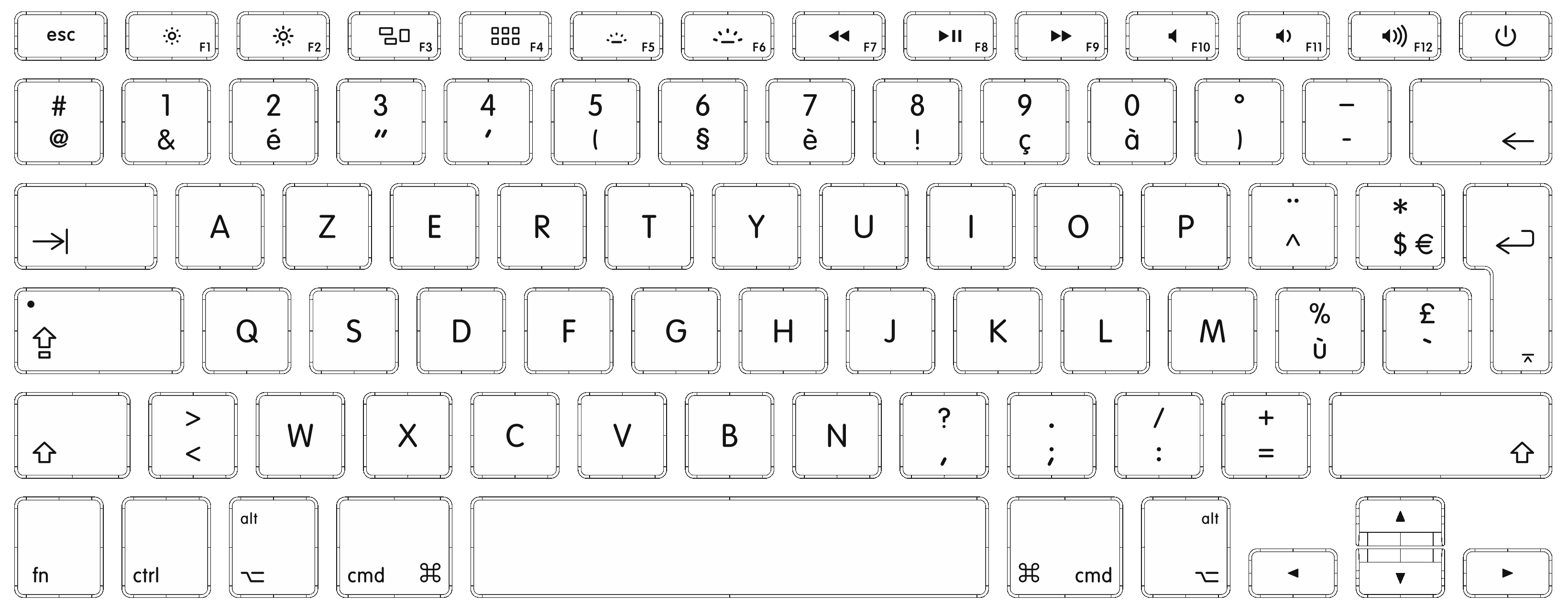
https://support.apple.com/library/content/dam/edam/applecare/images/en_US/keyboards/french_notebook.png
French keyboard - notice the #7 key

Imagine you have a keyboard and you have to spell your name but the keyboard is missing the a, the e and the i. What does your name look like now? It doesn't look like your name. 
That's what happened to me when I moved to England - my name wasn't mine anymore. Obviously I insisted on googling it each time we were on the computers and copying and pasting my real name with the è in it and I dutifully drew that little bar over the e before turning in any written work. But after a few months of seeing the little red waves under my name and loosing time looking through the foreign characters section on Word I gave up. That was the first time my name changed. Altogether I've had this name change for six non consecutive years. If you're confused please look at the title.

Second time was one summer I went to camp and we got to choose our names - I wanted to be called Ginny (as in Harry Potter Ginny) but another girl had already taken it so I ended up with Jenny and discovered the song Jenny from the Block, the only Jennifer Lopez song I actually know. We all made friends but only found out each others' real names on the last day when we were exchanging addresses. I still only remember those people through the names I met them with (made friends with the Ginny girl by the way). I only changed my name for three weeks but I remember it very well for something that happened a long time ago. Changing names wasn't hard at all and I started turning around pretty soon when people called out for 'Jenny.'

The last time I changed names was this summer - I pretended to be called Alice and invented this whole fake story to a bunch of people for some messed up twisted plan (that totally worked, thank you Blair Waldorf) and these people, who actually know someone who knows my real name, still refer to me as Alice. I loved being able to invent a whole other person and I could've kept my real name but I chose not to.

The last name change demonstrates that I do associate my 'story' to my name as I chose not to mix my own name with a story that wasn't mine. I'd like to say I care a huge amount about my name and its roots (Moroccan, French, Spanish, depends on where you look) but I honestly don't - I feel like a name is interchangeable with another as shown in the first two examples. It's on my passport, my birth certificate and that's about it. I don't believe anything that is "me" is attached to my name. There is no personal meaning to me, except that when a teacher is doing the attendance sheet for the first time and awkwardly pauses, chances are that that's my name - at least in English speaking countries. 

http://manrepeller.wpengine.netdna-cdn.com/wp-content/uploads/2015/03/ines-de-la-fressange-jeans-elle-FR-777x1000.jpg
The woman in the picture is Inès de la Fressange - she's a famous French model and my favourite person with who I share a name with.
Going back onto the accent business, that's where my "two" comes in - there's the French one, which is my true name and the one with 'that weird spelling' and then the Engliscised one - Ines. I would say that currently in this country Inès is my individual name whereas Ines is the name that makes me part of a larger whole, where people can easily type and write the name I have been given. 

inns

Friday, September 11, 2015

Lake Street USA & Handmaid's Tale

Wing Young Huie: Most Popular &emdash;
This photograph comes from a series entitled "Lake Street USA", by Wing Young Huie. The photographer was born in Minnesota to two Chinese immigrants, and he exhibited the 675 black and white photographs in a piece of public art display in 2001. The photos themselves were taken and showcased in Minneapolis, on a six mile stretch of Lake street. The pictures were taken over the course of four years.

The first thing we can observe from the picture is the woman in the middle of the road, seemingly in danger as cars are relatively close to her and there is no pedestrian crossing under her feet. She is pushing a sort of cart where you can see two garbage bags full of cans or bottles. By just looking at this picture you could think the meaning of this picture is to show that she is risking her life to carry those bottles - it is common knowledge that many people collect them to make some money off of them, and it is easy to interpret it as this simple 'risking her life for bottles' meaning.

If you look at the deeper meaning of the picture and read the text that is included underneath it you will see that that was not the photographer's intention. He talks about seeing her working diligently even through hard days in winter, mentions her daughter who talks about her never getting sick and her reason for her collecting those bottles - money but also the purpose it gives her every week.

Mr. Huie also talks about her native country, Cambodia, where she used to carry her groceries in the same way. He gives her a reason to be, in a place where she seems out of place, standing in the middle of the road when all these cars are driving past whereas she is just there. The 'other' or the unknown is also implied in the text as the children who throw rocks at her bruise her legs, most likely out of fear of the unknown, and you can see it in the picture, as the woman is in the motion of walking, across the road and out of the picture, where you cannot see - the unknown. Her reaction to the picture is also something that is alien, as she mentions being too thin and how she "used to be much prettier" - thin is the perceived beauty standard in Western culture and her opinion is different to it.

On the other hand, Margaret Atwood shows the others as having been plucked from their old society and dropped in a whole other context, without having integrated the new culture. Women in general in the Handmaid's Tale - Moira, and to some extent June (?), have not assimilated or accepted Gilead's culture in the way the woman in the picture has integrated her own culture from Cambodia (way of carrying her groceries) and accepted American culture. They rebel in whatever ways they can, but ultimately fall into their place in the new society. They unwillingly become members of the society and contribute to it, in the same way the woman in the photograph ends up doing, minus the unwillingness.